

Kumaş bakımı · 3 min read
Which fabrics shrink in the dryer? How to prevent it
Cotton, wool, linen, synthetics: which fabrics shrink in a tumble dryer and which dry safely? Why shrinking happens and how to prevent it.
Kumaş bakımı
By Laundry Cafe · 27 September 2026 · 3 min read
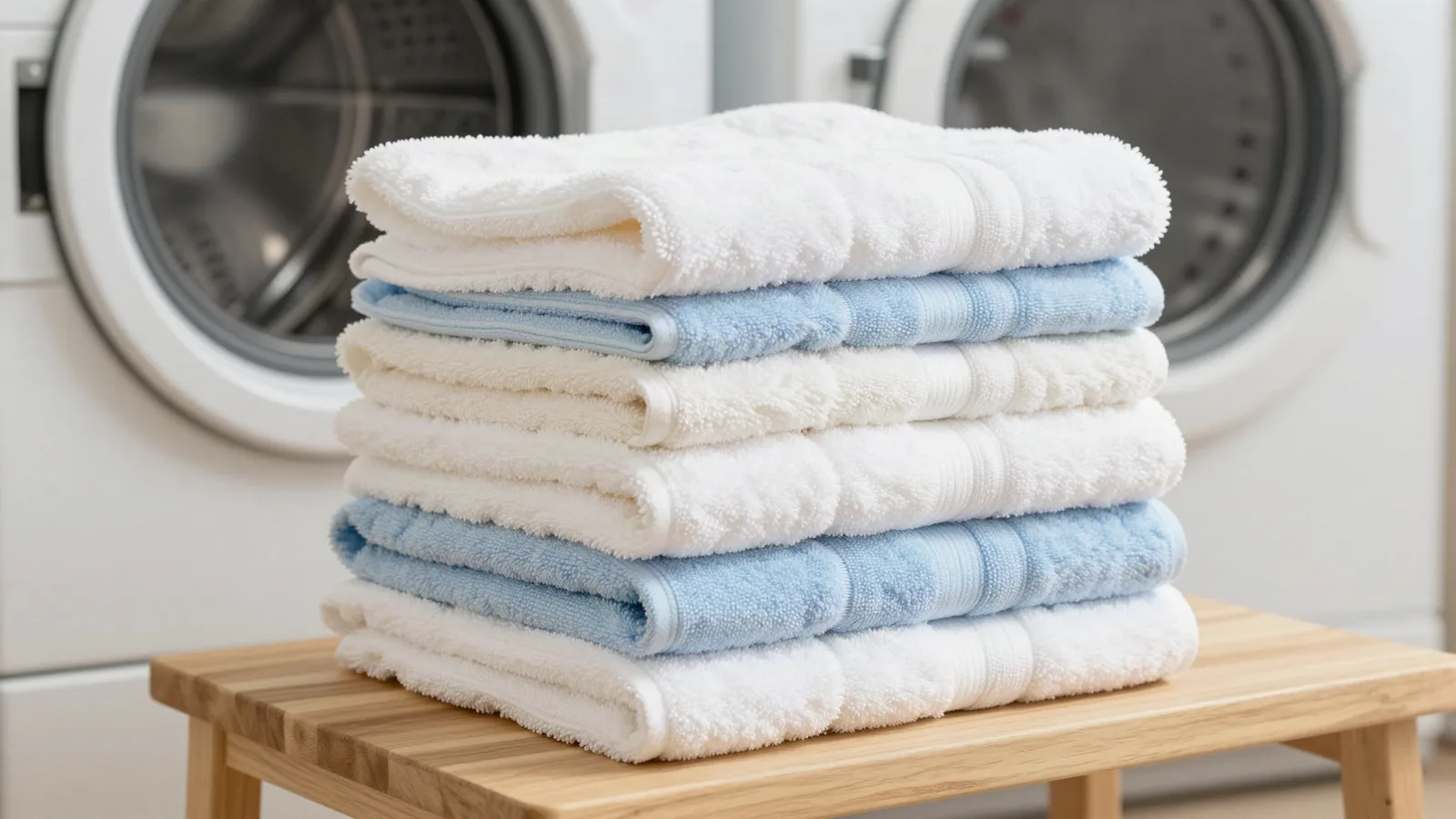
A new towel is wonderfully soft at first, but a few months later it's rough, scratchy and doesn't absorb water the way it used to. Most of us assume the towel is simply getting old. In fact, stiffness is usually caused not by age but by how we wash and dry our towels. With the right method, you can keep towels soft and fluffy for years.
This is the most common cause. The loops on a towel's surface soak up detergent like a sponge. Use too much and rinsing can't keep up; the detergent left between the loops dries and stiffens the fabric.
Surprising but true: fabric softener can make towels stiffer in the long run. Softener coats the fibres with a thin, waxy layer. It feels soft at first, but as it builds up it reduces absorbency and makes the towel heavier.
Minerals in hard water build up in towel fibres. Mains water is hard in many parts of Izmir, which speeds up stiffening.
Drying towels on a radiator or for long periods in direct sun stiffens the fibres. When a towel dries motionless on a line, its loops stick together and it turns cardboard-like.
Packing the machine with towels stops them tumbling and rinsing properly.
Most stiff towels can be rescued. Wash them once in hot water with no detergent and half a cup of vinegar. Then do a second wash, again with no detergent, this time with a few spoonfuls of bicarbonate of soda. These two steps dissolve the layer of detergent and softener built up in the fibres. Then tumble dry. You'll feel the difference immediately.
Washing bath towels every three or four uses, and hand towels and kitchen cloths more often, is a good routine. Leaving a damp towel in a heap speeds up bad smells and mildew; hang it open after use.
A well-cared-for towel can last for years. Trim pulled loops with scissors rather than pulling them, which can unravel a row. Use bleach only on white cotton towels and sparingly, as it weakens fibres. Make sure towels are completely dry before putting them away.
Our dryers are ideal for towels: you set the time with tokens and the towels come out fluffy and soft. Wash towels in one machine and clothes in another at the same time to save time and avoid lint on your clothes. Current prices are on the Prices page, and machine guidance is on the Services page.
In the short term, yes, but as it builds up it reduces absorbency and can stiffen towels. Use very little or none on towels.
Washing once in hot water with vinegar and once with bicarbonate of soda, both without detergent, then tumble drying, is usually enough.
Cotton towels can usually be washed at 60°C; check the limit on the label.
The machines are ready. So is the coffee.
Kumaş bakımı · 3 min read
Cotton, wool, linen, synthetics: which fabrics shrink in a tumble dryer and which dry safely? Why shrinking happens and how to prevent it.
Kumaş bakımı · 3 min read
Is it better to tumble dry or line dry laundry? An honest comparison of fabric life, softness, time, energy and hygiene, plus what to dry where.
Kumaş bakımı · 4 min read
Can a wool jumper go in the washing machine, and why does it shrink and felt? A step-by-step way to wash and dry wool and cashmere without losing the shape.