

Kumaş bakımı · 3 min read
Which fabrics shrink in the dryer? How to prevent it
Cotton, wool, linen, synthetics: which fabrics shrink in a tumble dryer and which dry safely? Why shrinking happens and how to prevent it.
Kumaş bakımı
By Laundry Cafe · 27 September 2026 · 3 min read
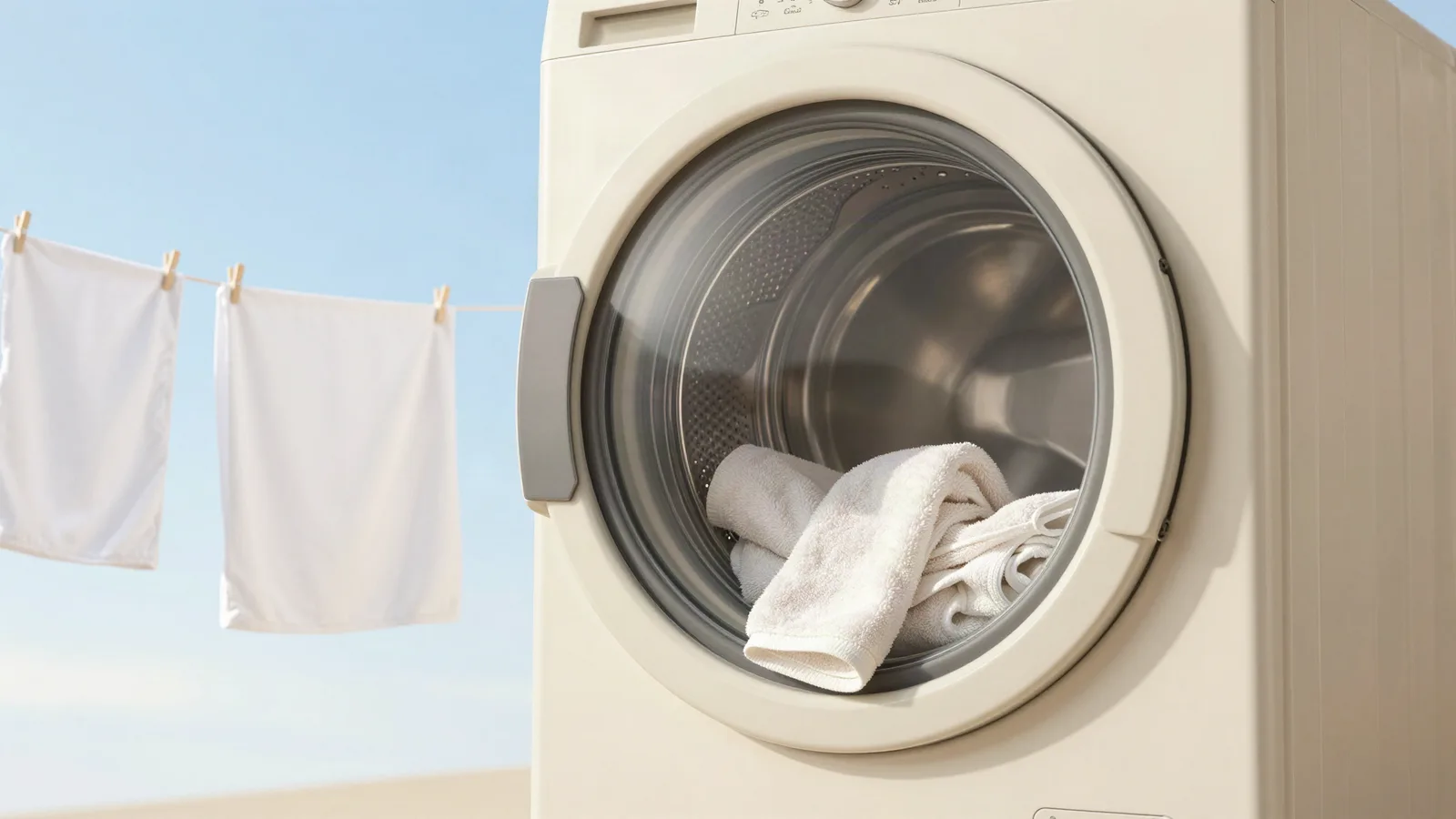
There are two basic ways to dry laundry: a tumble dryer and a washing line. Some people think dryers wear out fabric; others complain that line drying never ends. In fact, both methods have strengths and weaknesses, and the best results come from knowing what to dry where. Here's an honest comparison.
Tumble dryer: a load usually dries completely in under an hour, whether the weather is humid, cold or rainy.
Line drying: a few hours on a sunny summer day, possibly several days on a rainy winter one. Thick towels, jeans and blankets take the longest.
On time, the dryer wins by a mile, especially in winter.
Tumble dryer: fibres lift as laundry tumbles. Towels come out fluffy and bedding soft. That's much of the secret behind soft hotel towels.
Line drying: fibres of laundry dried motionless stick together. Towels in particular stiffen and can feel like cardboard.
The dryer wins on softness too.
Tumble dryer: used well, it reduces creasing. Taking laundry out slightly damp and folding or hanging it straight away greatly reduces ironing. But over-drying, and leaving laundry to cool in the drum, causes creases.
Line drying: shirts and dresses dry neatly on hangers, but laundry hung without shaking dries creased.
Here the result depends on how you use each method.
Tumble dryer: high heat and over-drying can shrink some fabrics and wear out elastane. The lint in the filter is fibre from your clothes. With the right heat and no over-drying, though, the effect is limited.
Line drying: the gentlest method, but long hours in direct sun fade colours and yellow some synthetics, and heavy wet jumpers can stretch.
The line has a slight edge on fabric life, but the gap to a well-used dryer is small.
Tumble dryer: laundry dries quickly and completely, removing the risk of musty smells and mould. The heat also helps reduce bacteria.
Line drying: whites dried in the sun smell fresh and benefit from the sun's natural brightening. But laundry drying slowly in humid weather develops a musty smell.
Tumble dryer: it uses electricity. Spinning laundry at a high speed first, loading correctly and keeping the filter clean all reduce consumption.
Line drying: no energy. But laundry dried indoors raises humidity, which in some homes means extra ventilation or a dehumidifier.
Suited to the tumble dryer:
Best dried on a line or flat:
Spin laundry at a high speed first so the dryer has less water to remove. Dry similar fabrics together, load the drum properly (not too little, not too much), keep the filter clean for good airflow, and use dryer balls to separate laundry and shorten drying time.
Often the best result comes from combining the two. A short round in the dryer for shirts and cotton trousers, then hanging them slightly damp, reduces both creases and drying time. Drying towels and bedding fully in the machine gives softness and hygiene.
In our dryers you set the time with the number of tokens: a short round for thin fabrics, a longer one for towels and bedding. Current drying times and prices are on the Prices page.
High heat and over-drying can shrink some fabrics; with the right heat and no over-drying, the effect is limited.
Tumbling lifts the loops as the towel dries; on a line, the loops dry motionless and stick together.
Wool jumpers, silk and delicate fabrics, and anything with a crossed-out tumble-dry symbol.
The machines are ready. So is the coffee.
Kumaş bakımı · 3 min read
Cotton, wool, linen, synthetics: which fabrics shrink in a tumble dryer and which dry safely? Why shrinking happens and how to prevent it.
Kumaş bakımı · 3 min read
Why does a new towel turn stiff and stop absorbing water after a few washes? The causes, and practical ways to keep towels as soft as hotel towels.
Kumaş bakımı · 4 min read
Can a wool jumper go in the washing machine, and why does it shrink and felt? A step-by-step way to wash and dry wool and cashmere without losing the shape.