

Kumaş bakımı · 3 min read
Tumble dryer or washing line? Fabric, time and energy compared
Is it better to tumble dry or line dry laundry? An honest comparison of fabric life, softness, time, energy and hygiene, plus what to dry where.
Kumaş bakımı
By Laundry Cafe · 27 September 2026 · 3 min read
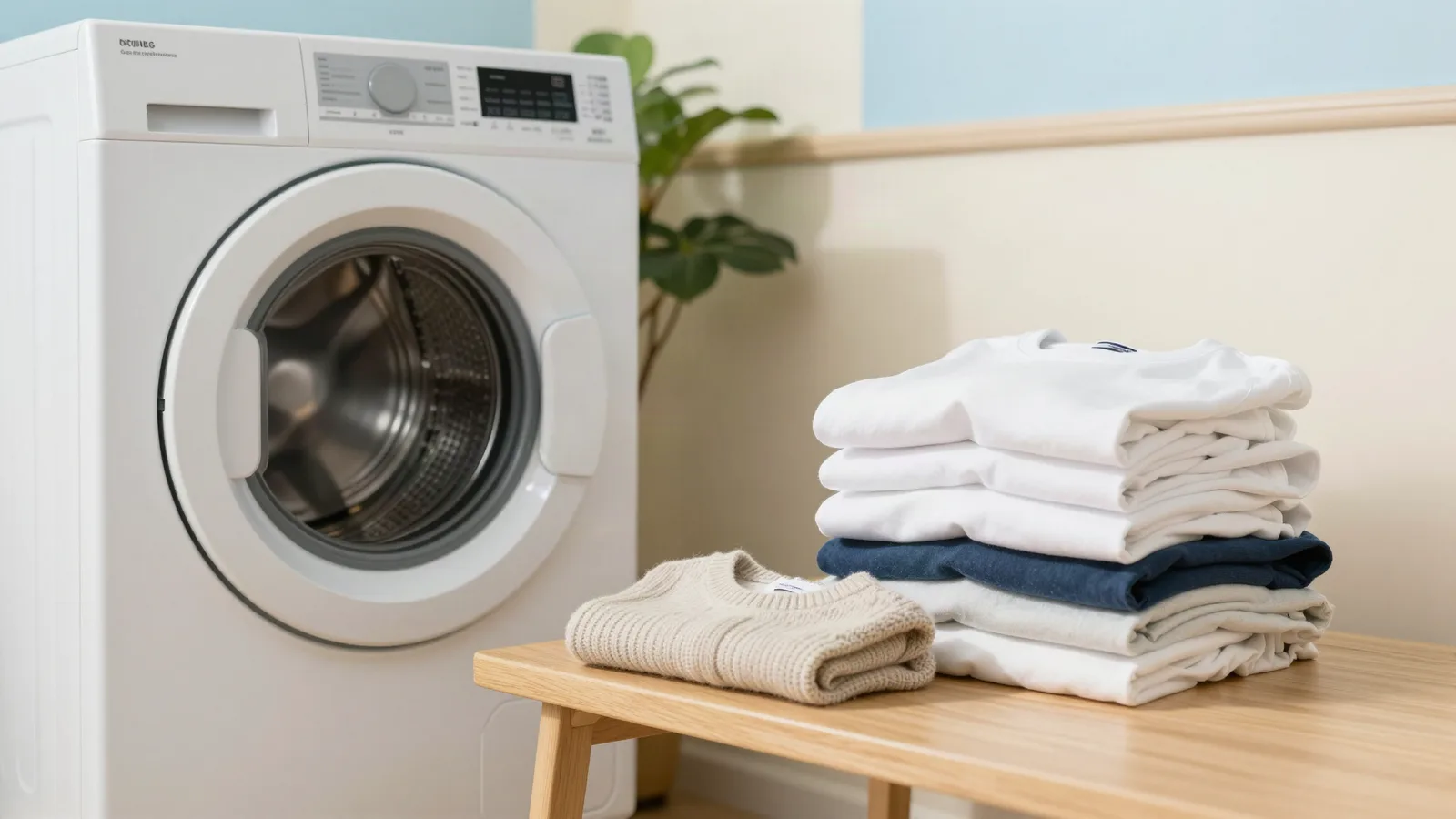
Pulling your favourite T-shirt out of the dryer one size smaller is one of the most familiar laundry disappointments. The good news is that shrinking isn't random. Once you know which fabrics shrink and why, you can use a tumble dryer with confidence and easily tell which items to set aside.
Fabric fibres are stretched under tension while the cloth is woven or knitted. When heat, moisture and movement come together, the fibres release that tension and try to return to their natural, shorter state. A tumble dryer provides all three at once, which is why shrinking is most noticeable there. So the real cause isn't heat alone; it's heat combined with moisture and constant tumbling.
There are two kinds of shrinking:
Soaking a slightly shrunken cotton T-shirt in lukewarm water with a little hair conditioner, then gently stretching it while damp, sometimes works because it helps the fibres relax. Felted wool, however, can't really be saved, which is why prevention is always easier than cure.
You decide the drying time with the number of tokens. That's a big advantage for avoiding shrinkage: a short round with few tokens for thin fabrics, a longer one for thick items like towels and bedding. Splitting drying into two rounds and taking delicate items out in between also works well.
A few more habits help too. Shake each item out before it goes into the dryer so it doesn't dry in a tight twist, and fold or hang everything as soon as the drum stops; laundry left warm in a heap creases and can feel damp again. If you're drying a mixed load, check it halfway through and pull out anything that's already dry.
Current drying times and prices are on the Prices page. You can see which items suit which machine on the Services page.
Yes, on low or medium heat and without over-drying. Taking them out slightly damp and finishing on a hanger reduces shrinking.
Not unless the label specifically allows it. Wool felts with heat and movement, and that's permanent.
High heat combined with over-drying. The time laundry spends in the drum after it's already dry does the most damage.
The machines are ready. So is the coffee.
Kumaş bakımı · 3 min read
Is it better to tumble dry or line dry laundry? An honest comparison of fabric life, softness, time, energy and hygiene, plus what to dry where.
Kumaş bakımı · 3 min read
Why does a new towel turn stiff and stop absorbing water after a few washes? The causes, and practical ways to keep towels as soft as hotel towels.
Kumaş bakımı · 4 min read
Can a wool jumper go in the washing machine, and why does it shrink and felt? A step-by-step way to wash and dry wool and cashmere without losing the shape.