

Kumaş bakımı · 3 min read
Which fabrics shrink in the dryer? How to prevent it
Cotton, wool, linen, synthetics: which fabrics shrink in a tumble dryer and which dry safely? Why shrinking happens and how to prevent it.
Kumaş bakımı
By Laundry Cafe · 27 September 2026 · 3 min read
In many homes, fabric softener seems as essential as detergent. Its lovely scent and that first soft touch make it popular. But did you know softener isn't good for every fabric, and actually damages some clothes? This post explains how softener works, when it helps and when you should stop using it.
In the final rinse, softener coats the surface of fabric fibres with a thin layer. That layer reduces friction between fibres, so the fabric feels softer, creases less and has less static. Most of the scent comes from fragrance added to that coating.
The problem is that the layer builds up a little more with every wash. What starts as a soft coating gradually masks the fabric's natural properties.
Even here, a small amount is enough. Half the dose on the pack often gives the same effect.
Softener reduces towels' absorbency. Coated loops can't draw water in, and over time the towel gets heavier and stiffer. It's best to drop softener for towels or use very little.
Wicking, breathable fabrics lose those qualities when coated with softener. The coating also traps odour inside, leading to lasting sweat smells.
The water-repellent finish on rain jackets and technical coats stops working once coated with softener.
Microfibre cleans thanks to the tiny gaps between its fibres. Softener fills those gaps and the cloth stops cleaning.
In duvets, pillows and puffer jackets, softener reduces the filling's loft.
On sensitive skin, softener residue and fragrance can cause irritation.
Many people use softener for the scent rather than softness. But clean, fully dry laundry already smells pleasant and neutral. If laundry still smells bad after washing, the problem isn't a lack of softener; it's usually too much detergent, wet laundry left sitting in the machine, or clothes put away before they're dry. Softener's fragrance only masks that for a while. The lasting fix is taking laundry out as soon as the wash ends and drying it fully. For a light scent, a lavender sachet in the wardrobe does the job.
If you want to keep using softener:
Our dryers are the easiest way to get soft laundry without softener. Dry your towels and bedding in them and you'll find they come out fluffy and soft with no softener at all. Current prices are on the Prices page, and machine guidance is on the Services page.
No. It can damage towels, sportswear, technical jackets, microfibre and filled items; a little can be used on everyday cotton clothes.
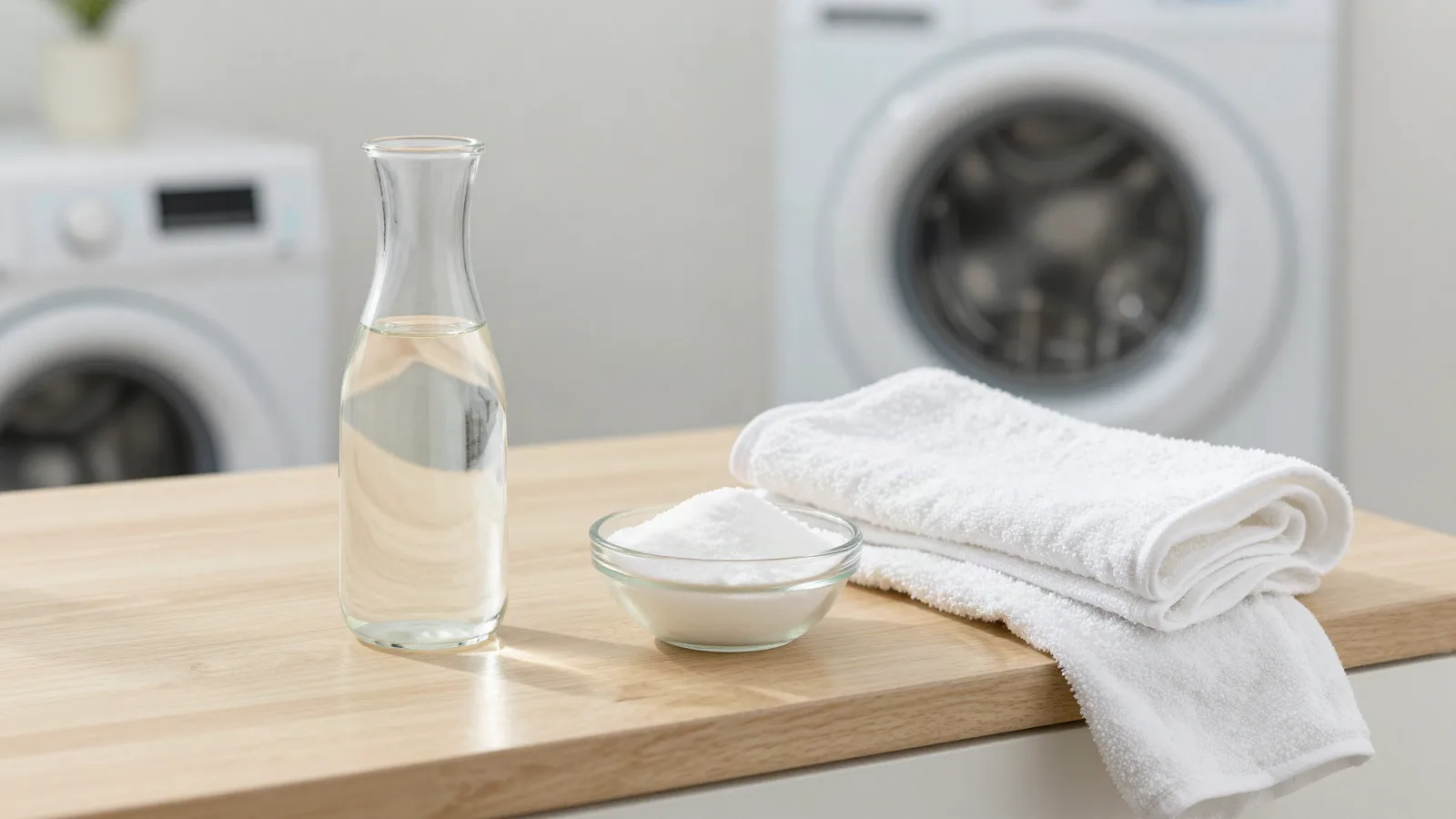
A splash of vinegar in the rinse compartment, tumble drying and dryer balls are good alternatives.
No, there's no vinegar smell once the laundry is dry.
The machines are ready. So is the coffee.
Kumaş bakımı · 3 min read
Cotton, wool, linen, synthetics: which fabrics shrink in a tumble dryer and which dry safely? Why shrinking happens and how to prevent it.
Kumaş bakımı · 3 min read
Why does a new towel turn stiff and stop absorbing water after a few washes? The causes, and practical ways to keep towels as soft as hotel towels.
Kumaş bakımı · 4 min read
Can a wool jumper go in the washing machine, and why does it shrink and felt? A step-by-step way to wash and dry wool and cashmere without losing the shape.