

Rehber · 3 min read
How much detergent should you use? The hidden cost of too much
Does more detergent mean cleaner laundry? What decides the right amount, and how too much detergent harms your laundry, your skin and the machine.
Rehber
By Laundry Cafe · 27 September 2026 · 3 min read
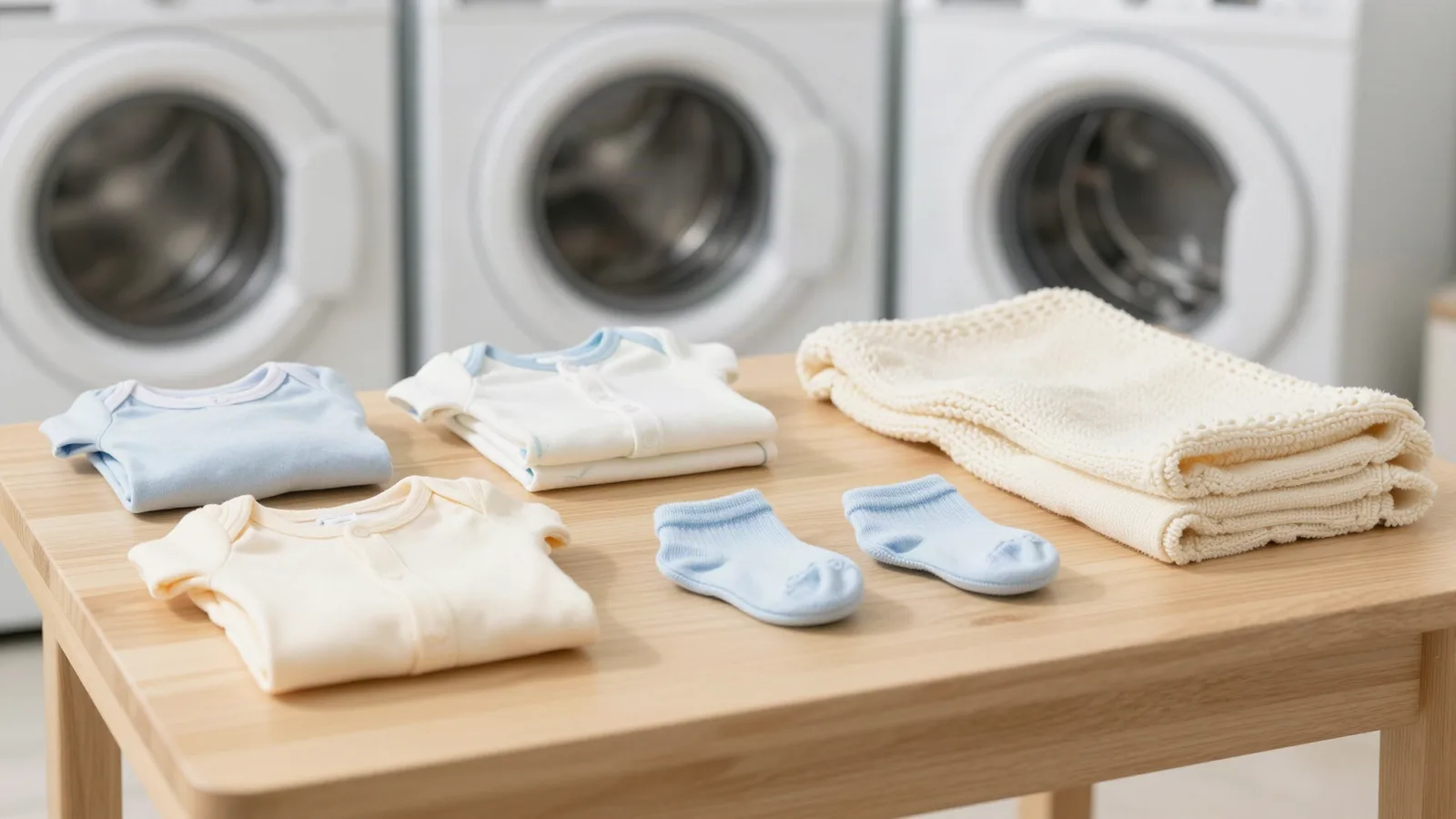
A baby's skin is much thinner and more sensitive than an adult's. Detergent, fragrance or softener left in clothes can cause redness and itching. That's why baby laundry needs a little extra care. It doesn't have to be complicated, though; a few simple rules keep your baby's clothes clean and safe.
Yes. During manufacture, storage and transport, new clothes come into contact with dust, excess dye and finishing chemicals applied to the fabric. Washing them once before they touch your baby's skin removes these residues. The same goes for gifted clothes, sheets, blankets and soft toys.
Stains on baby clothes are unavoidable. The key is to act without delay.
Make sure a stain is completely gone before drying; the heat of a dryer makes it permanent.
Baby clothes can be tumble dried on low or medium heat. Cotton items may shrink slightly in the first drying, so buying a little on the big side is a good idea. Clothes put away before they're completely dry can smell damp. A tumble dryer is the most practical way to be sure laundry is truly dry, especially in winter and humid weather.
If you use cloth nappies, follow the manufacturer's washing instructions; usually a cold pre-wash followed by a hot main wash. For blankets and sleeping bags, a large machine helps the fabric rinse thoroughly.
Many families start washing baby clothes with the rest of the family's fragrance-free laundry after a few months, if the baby shows no skin sensitivity. If there's irritation, eczema or allergy, though, keep washing separately for longer and ask a paediatrician.
Getting ready for a newborn can mean washing dozens of clothes, sheets and blankets, which takes hours at home. At a laundromat you can use several machines at once, washing baby clothes in one and larger textiles in another, and take everything home dry the same day. Current prices are on the Prices page, and machine guidance is on the Services page.
Yes. A single wash removes dust, excess dye and finishing chemicals from new clothes.
It's not recommended. Softener leaves a residue that touches the skin and can irritate sensitive skin.
No. Rinse protein stains in cold water first; hot water sets the stain.
The machines are ready. So is the coffee.
Rehber · 3 min read
Does more detergent mean cleaner laundry? What decides the right amount, and how too much detergent harms your laundry, your skin and the machine.
Rehber · 3 min read
Can puffer jackets, down coats and winter jackets go in the washing machine? How to wash your jacket without losing its loft, from label to drying.
Rehber · 3 min read
How to machine wash sheer and heavy curtains, which cycle to choose, and how to dry them without needing an iron. The key tips for washing curtains.