


Rehber · 3 min read
How to wash baby clothes: a gentle guide for sensitive skin
Should newborn clothes be washed before first use, which detergent should you pick, and how do stains come out? A step-by-step guide to washing baby clothes safely.
Rehber
By Laundry Cafe · 27 September 2026 · 3 min read
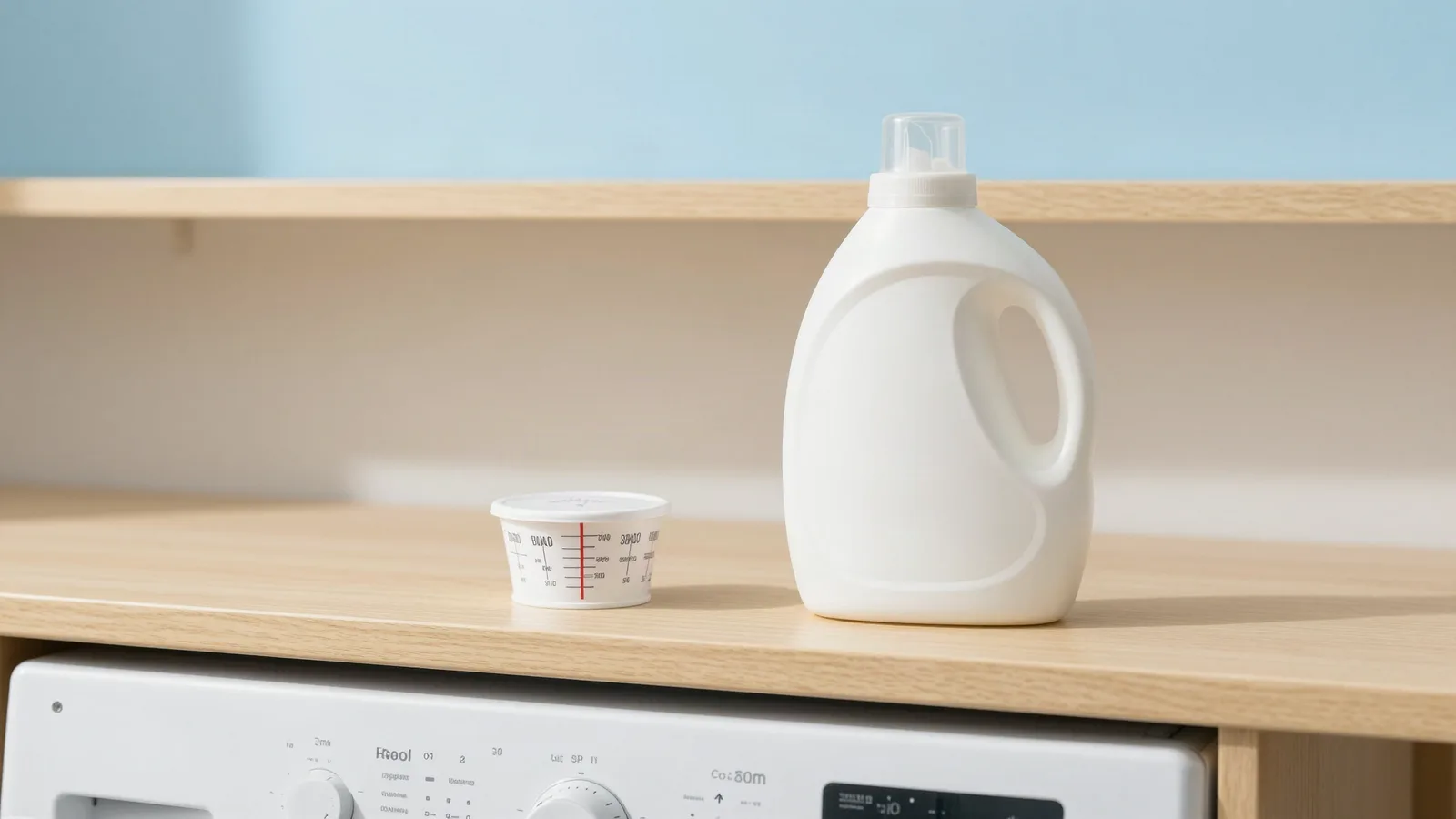
The most common laundry mistake may also be the most innocent-looking: "I'll add a bit more detergent to get it cleaner." In fact, with detergent, more often means worse. Excess detergent doesn't rinse out, stays in the fabric, can irritate skin, causes odours and harms the machine too. Finding the right amount is much easier than you'd think.
Detergent contains molecules that lift dirt and grease away from fabric into the water. To do their job, they need enough water and movement. Past a certain point, extra detergent adds no cleaning power; all that increases is foam and residue that the rinse can't remove.
Modern detergents are far more concentrated than they used to be. Using today's detergent with the measure you used years ago often means nearly double what you need.
Most of our laundry is actually lightly or normally soiled, so most washes don't need the top dose.
Hard water neutralises some of the detergent, so you may need slightly more. In soft water, the same amount is too much and produces lots of foam. Mains water is hard in many parts of Izmir; the "hard water" dose on the pack is a good starting point there.
A half-full machine doesn't need as much detergent as a full one. Larger machines use more water, so the dose needs adjusting. Pack doses are usually based on a standard home machine.
Unrinsed detergent touches your skin for as long as you wear the garment. It can cause itching and redness for sensitive skin, babies and people with eczema.
Too much foam makes the machine work harder, can confuse its sensors and lengthens rinsing. Built-up residue leads to smells and mould in the drum, seal and detergent drawer.
If you notice any of these, run your laundry through one extra rinse with water only; it removes most of the residue.
Whichever you choose, reading the dosing table on the pack is the best guide.
At the laundromat, you can ask our team on site about detergent and using the machines. Our machines may be larger than home machines, so the right dose can differ. Current prices are on the Prices page, and machine guidance is on the Services page.
No. Past a certain point cleaning doesn't improve; the excess doesn't rinse out and leaves residue and smells in the fabric.
Heavy foam, fabric that feels stiff or slippery, a lingering faint smell and white marks on dark clothes are the main signs.
They're convenient, but you can't adjust the amount; for small, lightly soiled loads they're usually too much.
The machines are ready. So is the coffee.
Rehber · 3 min read
Should newborn clothes be washed before first use, which detergent should you pick, and how do stains come out? A step-by-step guide to washing baby clothes safely.

Rehber · 3 min read
Can puffer jackets, down coats and winter jackets go in the washing machine? How to wash your jacket without losing its loft, from label to drying.

Rehber · 3 min read
How to machine wash sheer and heavy curtains, which cycle to choose, and how to dry them without needing an iron. The key tips for washing curtains.