

Rehber · 4 min read
Can you wash a duvet at home? A guide by machine size
Can a duvet go in your home washer, what machine size does it need, and why drying it fully matters so much? A step-by-step guide.
Rehber
By Laundry Cafe · 25 September 2026 · 4 min read · Updated: 27 September 2026
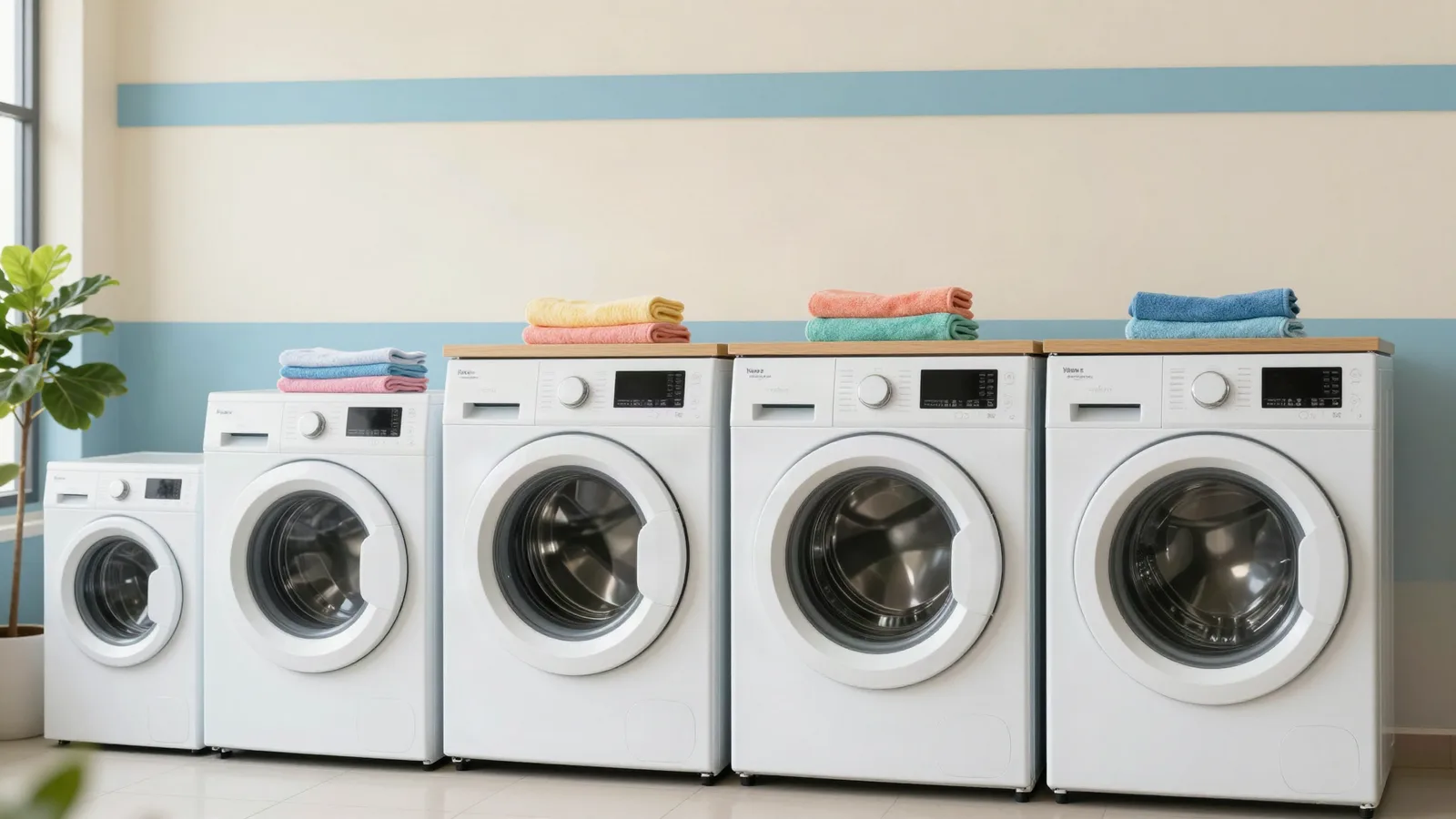
The first decision at a laundromat is machine size. 10 kg, 14 kg or 28 kg? Choosing wrong is annoying either way: pick a machine that's too small and your laundry gets squashed and doesn't come out clean; pick one that's bigger than you need and you pay more than necessary. This post explains what capacity really means, roughly how much common items weigh, and which of the three machine sizes at Laundry Cafe suits which job.
The kilogram figure on a machine is the maximum weight of dry laundry it can take. That doesn't mean you should fill the drum to the brim. For a good wash, clothes need room to tumble so water and detergent can get between the fibres. A good rule of thumb: fill the drum about three-quarters full and leave a hand's width of space at the top.
Overloaded laundry:
The weights below are typical values for dry laundry. They vary with fabric thickness but give you a good idea:
A simple example: one person's clothes for a week (seven T-shirts, two pairs of jeans, underwear, socks and a few towels) usually come to around 5–7 kg.
The 10 kg machine is ideal for one or two people's weekly clothes. T-shirts, shirts, trousers, underwear and small towels fit comfortably. It's also the most popular size with travellers and students.
Good for: everyday clothes, underwear, towels, sportswear.
The 14 kg machine suits a larger family's weekly wash or bedding sets. Duvet covers and sheets feel light when dry but take up a lot of room in the drum, so going one size up gives better results. It's also the right size for bulky but light items such as pillows and soft toys.
Good for: family loads, duvet covers, sheets, curtains, pillows, soft toys.
The 28 kg machine is for large, heavy items. Duvets and blankets become many times heavier when wet and can't tumble in a small machine. Rugs and kilims belong here too.
Good for: duvets, blankets, bedspreads, rugs, kilims, large curtain sets.
Just as with washing, you shouldn't overfill a dryer. Hot air needs to circulate between the clothes. If the drum is packed, the outer items dry while the ones in the middle stay damp, and you end up spending more tokens.
A practical approach: dry a big wash in two batches, or dry thick and thin fabrics separately. Thick items like towels and jeans take longer; T-shirts and shirts dry much faster. Taking thin fabrics out early reduces creasing and protects the fabric.
For large items like duvets and blankets, splitting drying into a few rounds and shaking the item out in between gives the best result.
You don't have to guess the machine size when booking. In the first step you choose what you're washing (for example "Everyday clothes" or "Blankets, duvets"). The system then shows only the machines that suit it. If you have different kinds of laundry, it suggests a machine that fits everything or helps you create separate bookings when needed.
You'll find current prices and times for each machine size on the Prices page, and which items suit which machine on the Services page.
Dry laundry.
We don't recommend it. Leave about a hand's width at the top so the laundry can move freely.
Sportswear, outdoor and technical fabrics are washed in the 10 and 14 kg machines; the 28 kg machine isn't suitable for them.
The machines are ready. So is the coffee.
Rehber · 4 min read
Can a duvet go in your home washer, what machine size does it need, and why drying it fully matters so much? A step-by-step guide.
Rehber · 4 min read
Not every rug belongs in a washer. Which rugs and kilims can be machine washed, which shouldn't be, and how to prepare them.
Rehber · 3 min read
Can puffer jackets, down coats and winter jackets go in the washing machine? How to wash your jacket without losing its loft, from label to drying.