

Rehber · 4 min read
Can you machine wash a rug? Which rugs are suitable
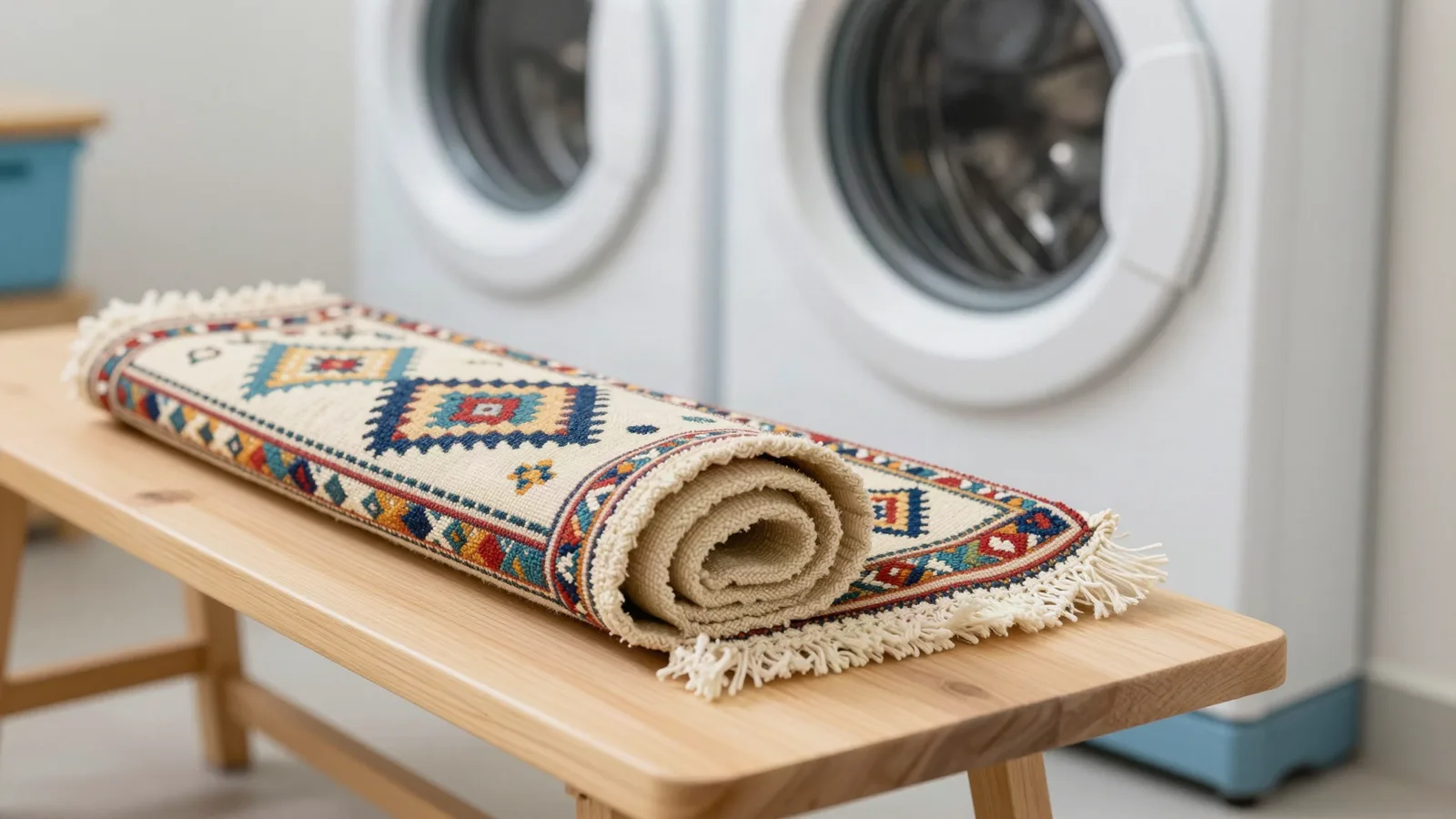
Not every rug belongs in a washer. Which rugs and kilims can be machine washed, which shouldn't be, and how to prepare them.
Rehber
By Laundry Cafe · 25 September 2026 · 4 min read · Updated: 27 September 2026

Washing a duvet is the chore most of us keep putting off. The reason is simple: duvets are bulky, become very heavy when wet, and rarely fit a home washer. Even when they do fit, the filling doesn't rinse properly, clumps together, and takes days to dry. This guide walks you through how to wash a duvet safely, which mistakes shorten its life, and when a larger machine makes all the difference.
The label tells you how to wash it, and it comes before anything else. Two duvets that look the same can behave very differently depending on the filling.
If the label shows a dry-clean-only symbol, don't machine wash it. If you're unsure, just ask us.
Most home washers hold 7–9 kg. A duvet feels light when dry, but its weight multiplies once it's wet. When the drum is packed:
In short, the duvet needs room to tumble, fold and open up in the drum. At Laundry Cafe we wash blankets and duvets in our 28 kg machine. That capacity leaves enough room for even a double duvet to move freely through the water. If you're not sure about your duvet's size, ask us before you come.
A little preparation noticeably improves the result:
For most synthetic duvets, warm water on a normal or delicate cycle is enough. For down and wool, choose a delicate cycle and a low spin. Very hot water can damage the filling, while very cold water struggles with body oils. Never go above the temperature on the label.
Drying is where most people go wrong. A duvet that feels dry on the outside can still be damp in the middle. A damp duvet soon smells musty and can grow mould, and then the only fix is washing it again.
You can extend drying time by adding tokens; current times and prices are on the Prices page. Rather than carrying a wet duvet home to dry on a balcony, we recommend drying it fully here: it's faster and the filling fluffs up better.
If you use a duvet cover, washing the duvet itself once or twice a year is usually enough. The change of seasons, just before you store it away, is a good moment. People with allergies, pet owners, or anyone who uses a duvet without a cover may want to wash it more often.
Before storing your duvet, make sure it's completely dry and keep it in a breathable bag. Plastic bags trap moisture.
At our shop in Buca you can put your duvet in the large machine and relax in our café while it washes. If you book, the machine waits for you and there's no queue. When you choose "Blankets, duvets" as the laundry type during booking, the system automatically suggests the right machine.
You can see which items suit which machine in the table on our Services page.
At Laundry Cafe, blankets and duvets are washed in the 28 kg machine; the smaller machines aren't suitable for them.
Squeeze it in a few places and feel the inside. If the centre of the filling still feels damp, keep drying.
Yes, on a delicate cycle, if the label allows it. If the label says dry clean only, don't machine wash it.
The machines are ready. So is the coffee.
Rehber · 4 min read
Not every rug belongs in a washer. Which rugs and kilims can be machine washed, which shouldn't be, and how to prepare them.

Rehber · 4 min read
What the kilos on a washing machine actually mean, how to estimate the weight of your load, and what goes in a 10, 14 or 28 kg machine.

Rehber · 3 min read
Can puffer jackets, down coats and winter jackets go in the washing machine? How to wash your jacket without losing its loft, from label to drying.