
Skip to content

Leke & bakım

Stain removal guide: coffee, tea, grease, blood and sweat

By Laundry Cafe · 27 September 2026 · 4 min read
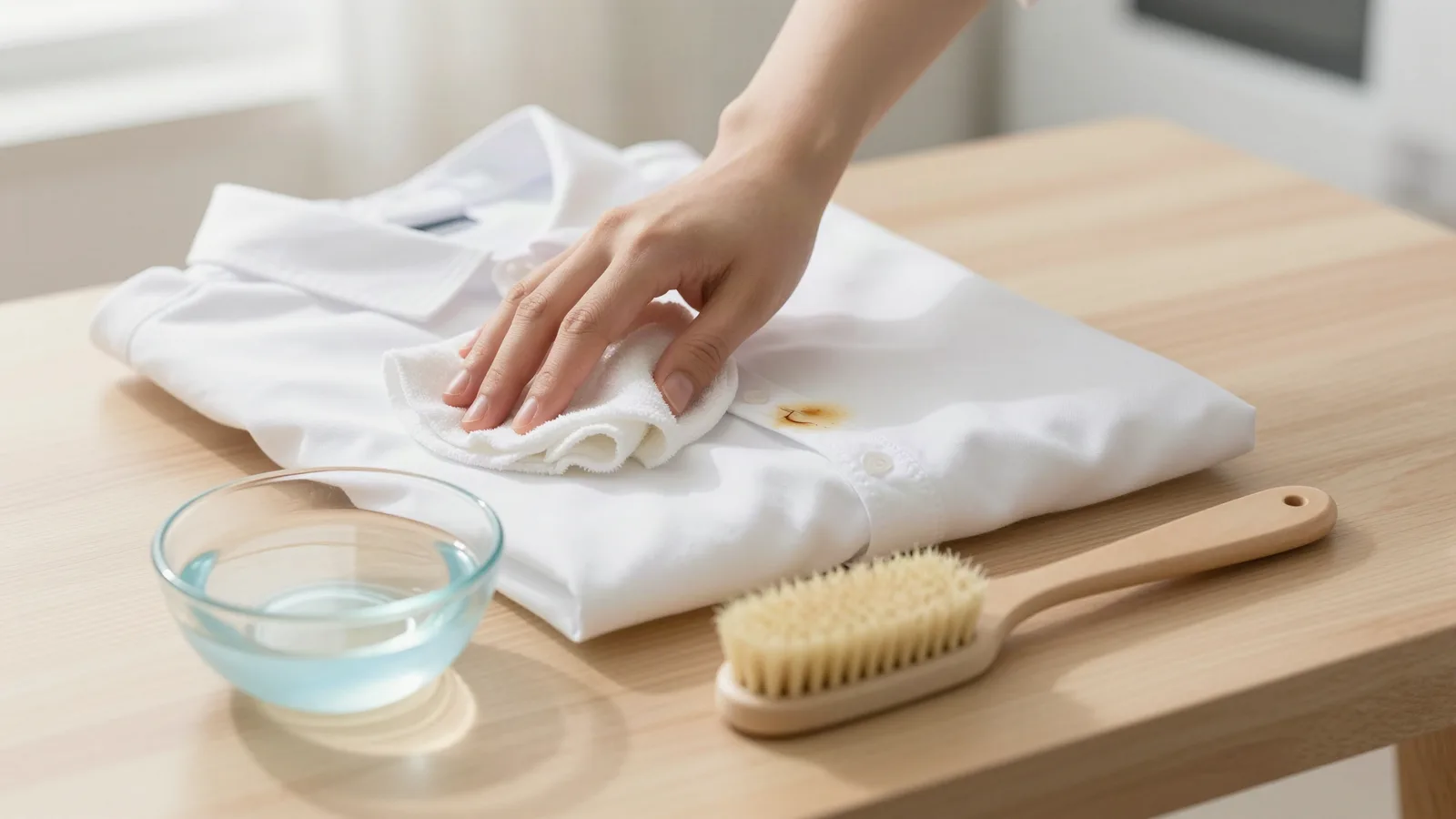
Stains are unavoidable; what matters is how you deal with them. The same stain can come out in minutes with the right method, or become permanent after one wrong move. This guide covers the most common stains and the right approach for each. Let's start with the golden rules that apply to every stain.

The golden rules

  1. Act fast. The fresher the stain, the easier it comes out. Stains that dry and sit work their way into the fibres.
  2. Blot, don't rub. Rubbing spreads a stain and pushes it deeper. Blot it with a clean cloth or tissue.
  3. Work from the outside in. Move from the edge of the stain towards the centre so it doesn't spread.
  4. Start with cold water. If you don't know what the stain is, cold water is always safe. Hot water sets some stains.
  5. Don't dry until it's gone. The heat of a dryer or the sun sets stains into fabric.
  6. Test somewhere hidden first. Especially on coloured and delicate fabrics, test any stain remover on an inside seam.

Coffee and tea

Coffee and tea are tannin stains.

  • Rinse the stain immediately from the back with cold or lukewarm water.
  • Apply a little liquid detergent and leave for five to ten minutes.
  • Wash as normal.
  • Milky coffee contains protein too, so avoid hot water.
  • For old, dried stains, soaking in warm water with oxygen bleach for a few hours works well.

Grease

Greasy stains like cooking oil, butter and salad dressing don't come out with water; they need something that dissolves oil.

  • Blot away excess grease with a tissue.
  • Sprinkle cornflour, talc or bicarbonate of soda over the stain and leave for half an hour; the powder absorbs the oil.
  • Brush off the powder and apply washing-up liquid, which is designed to break down grease.
  • Leave for a few minutes, then wash at the hottest temperature the label allows.

Blood

Blood is a protein stain; hot water cooks it into the fabric.

  • Always rinse in cold water.
  • For fresh stains, soaking in cold water with a little salt works well.
  • For dried stains, use an enzyme stain remover or oxygen bleach.
  • On white cottons, a little hydrogen peroxide also works; test on coloured fabrics first.

Sweat

Yellow underarm marks come from sweat reacting with deodorant.

  • Apply a paste of bicarbonate of soda and water and leave for an hour.
  • Alternatively, soak the area in white vinegar.
  • Wash at the highest temperature the label allows.
  • Letting deodorant dry before dressing prevents new marks.

Red wine and fruit juice

  • Blot immediately; don't rub.
  • Cover with plenty of salt, which draws out the liquid.
  • Rinse from the back with cold water.
  • Pre-treat with liquid detergent or oxygen bleach, then wash.

Grass

Grass stains are a classic on children's clothes and sports shorts.

  • Apply liquid detergent or an enzyme stain remover and leave without rubbing.
  • Soaking in white vinegar also helps.
  • Wash in lukewarm water.

Ink

  • Ballpoint ink dissolves in alcohol. Put a tissue under the stain and dab it with cotton wool soaked in rubbing alcohol.
  • Change the tissue as ink transfers to it.
  • Then wash with liquid detergent.

Make-up

  • For oily make-up like foundation, washing-up liquid works well.
  • For lipstick, first scrape off the excess with the blunt side of a knife, then apply liquid detergent.
  • For mascara, use cold water and liquid detergent.

Your stain-removal kit

A few basics handle most stains: liquid laundry detergent, washing-up liquid, oxygen bleach, white vinegar, bicarbonate of soda and salt. Never mix chemicals; combining chlorine bleach with vinegar or other cleaning products releases dangerous gases.

Common mistakes

  • Rubbing the stain.
  • Washing blood and milk stains in hot water.
  • Putting stained items in the dryer before the stain is gone.
  • Mixing different stain removers.

Stained laundry at Laundry Cafe

Remember to pre-treat stained laundry before it goes into the machine. Don't put anything in the dryer until you're sure the stain is completely gone; wash it a second time if needed. Current prices are on the Prices page, and machine guidance is on the Services page.

Common questions

Does hot water remove blood stains?

No. Blood is a protein stain and hot water sets it. Always use cold water.

How do I remove a grease stain?

Absorb excess grease with cornflour or bicarbonate first, then apply washing-up liquid and wash at the hottest temperature the label allows.

Can stained clothes go in the dryer?

Not until the stain is completely gone. Heat makes stains permanent.

The machines are ready. So is the coffee.