


Rehber · 3 min read
How often should you change and wash bed sheets? A clean-bed guide
How often should sheets and duvet covers be changed, and at what temperature should they be washed? A practical bed hygiene guide, plus tips to make bedding last.
Rehber
By Laundry Cafe · 27 September 2026 · 3 min read
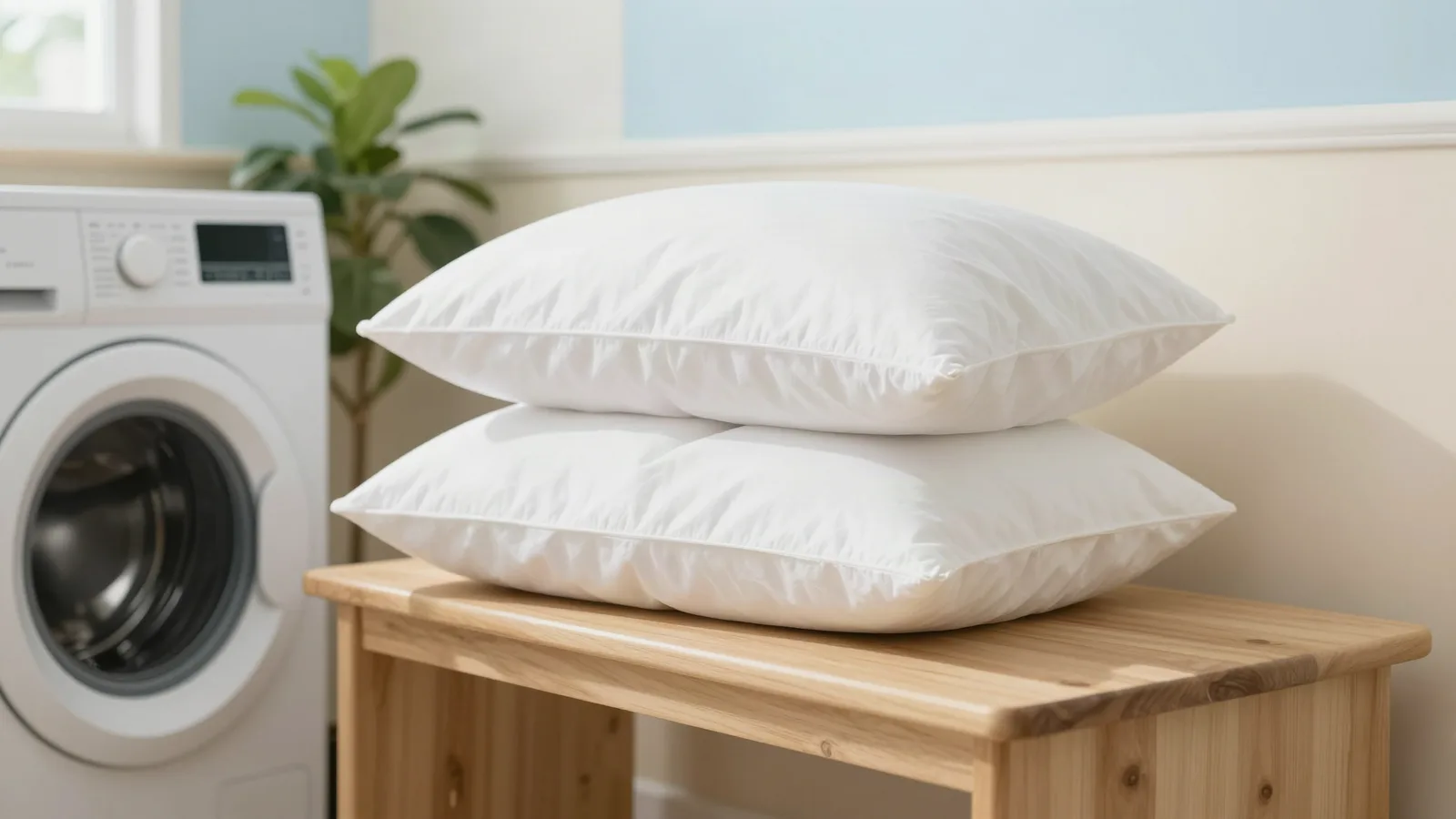
We rest our heads on our pillows for hours every night, yet they're among the least-washed things in the bedroom. We change pillowcases regularly, but the pillow itself often goes years without a wash. Underneath the case, sweat, hair oils and dead skin build up, which is where yellow pillow stains come from. The good news is that many pillows are easy to machine wash.
We sweat while we sleep, and oils from our face pass through the pillowcase into the pillow. Moisture and oil gradually soak into the filling and leave yellow stains. That's both a looks and a hygiene issue: a damp, oily environment is ideal for dust mites. For people with allergies, washing pillows regularly can noticeably improve sleep.
For fibre pillows, lukewarm water on a normal or delicate cycle works well. For down pillows, choose a delicate cycle and a low spin. Use little detergent and add an extra rinse; detergent is hard to rinse out of dense filling. For yellowed pillows, a soak in warm water with oxygen bleach before washing helps.
A pillow looks light when dry, but it gets heavy when wet and takes up space in the drum. In a small machine even two pillows can be squashed, and the inside of the filling doesn't get clean. A 14 kg machine has plenty of room for several pillows; if you want to wash pillows together with a duvet or blanket, choose the 28 kg machine.
The most common drying mistake is using a pillow while the inside is still damp. Damp filling clumps and smells.
Wash pillowcases weekly and the pillows themselves two or three times a year. To check whether a pillow is past its best, try a simple test: fold it in half. If it doesn't spring back when you let go, the filling is worn out and it's time for a new one. Fibre pillows usually last a few years; good down pillows last longer.
You can wash and dry your pillows together with your bedding in one go. When you book, choose "Toys, pillows" or "Bedding, sheets, curtains" and the system suggests the right machine. Current prices are on the Prices page, and machine guidance is on the Services page.
Fibre and down pillows can be machine washed safely on the right cycle; with memory foam, wash only the cover. Washing in pairs, using little detergent and drying until the centre is completely dry are the three basic rules for a clean, plump pillow.
Yes, most fibre pillows can be washed in lukewarm water on a normal or gentle cycle. Washing two at a time keeps the drum balanced.
No. Memory foam absorbs water and breaks down; wash only the cover, and wipe and air the pillow.
Pillowcases weekly, and the pillows themselves two or three times a year.
The machines are ready. So is the coffee.
Rehber · 3 min read
How often should sheets and duvet covers be changed, and at what temperature should they be washed? A practical bed hygiene guide, plus tips to make bedding last.

Rehber · 3 min read
Can puffer jackets, down coats and winter jackets go in the washing machine? How to wash your jacket without losing its loft, from label to drying.
Rehber · 3 min read
How to machine wash sheer and heavy curtains, which cycle to choose, and how to dry them without needing an iron. The key tips for washing curtains.